Reading beneath the surface of culture.
Twitch communities have built three parallel visual languages around three avatar lineages, each with a fundamentally different grammatical operation. None of this was designed. It emerged through use.
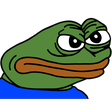
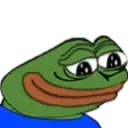
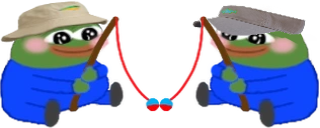

Pepe's grammar is affect. The Pepe the Frog character operates primarily through the -ge suffix system: Sadge (sadness), Madge (anger), Gladge (happiness), Wokege (sudden awareness). The suffix modifies the root emotion and the face changes to carry it. Roughly 1,750 distinct variants exist across monitored communities.



Cat's grammar is behavior. The cat avatar system, anchored by catJAM (a white cat bobbing to music), operates through action: catDance, catJAM, catPls. The face stays consistent. The body changes. When a community needs to express a new collective action, they put the cat in a new posture.
Peepo's grammar is context. Peepo, a deliberately crude redraw of Pepe originating from Finnish imageboard culture, operates by placing the same simple character into situations. Neither face nor body changes much. The meaning comes from the surroundings. Over 4,700 variants, nearly three times Pepe, because the creation barrier is the lowest of the three.
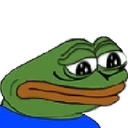
The systems bleed into each other. Pepe borrows cat grammar when it dances. Cat borrows Pepe grammar when it expresses affect. But the bleeding itself is analytically interesting: pepeJAM has ironic potential that catJAM doesn't, because Pepe carries register fluidity wherever it goes. The cat is structurally sincere. Pepe is structurally ambiguous. Peepo is structurally vulnerable, its crude drawing style encoding sincerity in the same way that a child's handwriting is harder to disbelieve than a font.
What's worth noting is the trajectory. The cat system is the newest and the fastest growing. catJAM arrived in 2020 and immediately threatened pepeJAM's dominance. This suggests something about what communities increasingly need: not just emotional expression but a way to perform involvement. The community doesn't just want to show how they feel about what's happening on stream. They want to show that they're in it.
This connects to a deeper shift. The relationship is parasocial by nature, the audience watching through a screen. But the behavioral grammar gives the audience a way to close that gap, not by expressing emotion about what they're watching, but by performing actions alongside it. When chat deploys catDance, they're not reacting to the streamer dancing. They're dancing with them. The sign performs co-presence.
Within the behavioral grammar, there's a deeper pattern. A family of signs around rhythmic participation that looks identical to an outsider but encodes three distinct collective behaviors depending on a single suffix.
-Dance (catDance, blobDance, OMEGADANCE) means the crowd is actively dancing. Peak energy. The community is performing through the avatar.
-JAM (catJAM, pepeJAM, dogJAM) means the crowd is vibing. Not dancing, listening. Deployed during chill moments, sustained good feeling. The community is appreciating, not performing.
-Pls (PepePls, AlienPls, forsenPls) frames the dance as supplication. "Please." "More of this." The crowd is asking, not doing.
The same base character carries all three. The suffix carries the register. The avatar carries the community identity. What looks like "chat is dancing" is actually three different collective behaviors: performing, appreciating, and requesting. The grammar is real, it's consistent across hundreds of communities, and it was never codified by anyone. It emerged through repetition and selection.
One of the more unexpected entries in the corpus is a family of signs built around the video game Genshin Impact. 31 variants across monitored communities. What makes them interesting isn't the game, it's the dichotomy the community performs through its visual signs.
The positive variants: HopOnGenshin, YayGenshin, genshinParty, GenshinWish. Celebration, invitation, excitement. Come play with us.
The negative variants: ewGenshin (a character sees the game and literally walks away), BurnGenshin, DIESOFGENSHIN, TheSameFuckingGenshinUpdate. Exhaustion, disgust, resignation.
Both registers are sincere. The community loves and hates the game simultaneously, and the visual signs encode both emotions without contradiction. Genshin Impact is free to play, but maxing out a character can cost roughly $500. The player base is deeply invested in time and money, acutely aware of the absurdity of that investment, and performing that awareness as cultural identity.
This is sunk cost fallacy personified as visual culture. The community isn't conflicted, they're fluent. They've built a visual vocabulary for an emotional state that doesn't have a word in English: the specific feeling of being too deep into something you can see clearly.
The emotes become the honest expression of that relationship, more honest than anything the players would say in words.
MOVE CURSOR TO SHIFT
Livestreaming is typically understood as a two-character system: the streamer and the chat. The performer and the audience. But documenting community dynamics at scale reveals a structural third character that shapes the entire medium: the moderator.
Moderators aren't audience members with privileges. They're a distinct narrative role. The streamer provides the content. The chat provides the collective response. The moderator provides the boundary, deciding what kind of discourse is possible, which signs are permitted, when a conversation has crossed a line. They're the editor of a live, unscripted production.
The moderator's influence is visible in the sign system itself. Communities develop emotes specifically about the moderator role: PETTHEMODS (a hand petting the moderator badge, showing affection or mock sympathy), moderator-specific greeting rituals, signs that reference moderation actions as community events. The act of moderation becomes content. The third character isn't backstage, they're part of the performance.
Two communities with identical audiences but different moderation styles will produce different sign systems. The moderator is a cultural variable that doesn't appear in any audience metric, any engagement dashboard, or any brand safety tool. But they're one of the strongest determinants of community culture.
The three-character system, performer, crowd, and editor, may not be unique to livestreaming. But livestreaming makes it visible in a way other media doesn't, because all three characters operate in public, in real time, and leave artifacts in the sign system.
The corpus is six weeks old. In month two I begin longitudinal tracking: recording how signs change over time rather than documenting them at a single point. Adoption curves, velocity shifts, which communities retain a sign and which let it go.
The hypothesis is that you define a community most accurately not by what signs it produces, but by which signs it retains.
I'll report back on what the data shows.